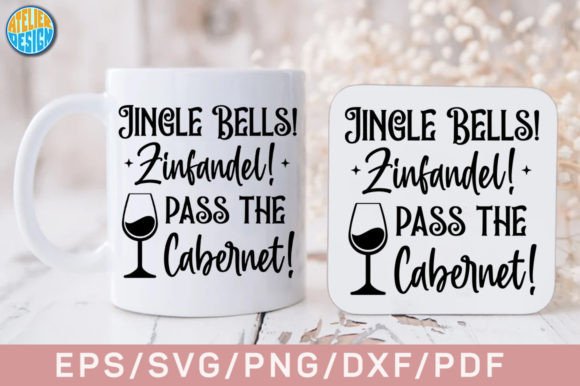
Jingle Bells Zinfandel Pass the Cabernet
First Impressions: A Toast to Holiday Charm—Not Just Another Script
When I opened Jingle Bells Zinfandel Pass the Cabernet, I didn’t see another holiday cliché—I saw personality. It’s playful, slightly irreverent, and unmistakably adult: a festive nod to wine lovers who’d rather clink glasses than jingle sleigh bells. The layout flows like a handwritten toast—curved, relaxed, with gentle kerning that avoids stiffness. There’s no aggressive ornamentation or overwrought flourishes, which is refreshing for a machine embroidery design meant to live on real fabric—not just a screen. As a designer who regularly sources digital embroidery files for client work and small-batch production, I immediately pictured it stitched onto a heavyweight cotton tote bag for a local wine shop’s holiday pop-up.
Where It Shines: Real Projects, Not Just Pixels
This isn’t a one-size-fits-all script—it’s a mood-setter. I tested it conceptually across several real-use cases: embroidered sweatshirt cuffs for a boutique’s “Wine & Wreaths” gift set, tea towel hems for handmade kitchen gifts, and even as a centered chest motif on relaxed-fit aprons for a vineyard-themed cooking class. In each case, Jingle Bells Zinfandel Pass the Cabernet held up because its rhythm invites readability without demanding perfection. The letterforms have enough weight to survive a fill stitch on medium-weight fabrics, and the spacing between “Zinfandel” and “Pass the Cabernet” leaves breathing room for stabilizer support and thread laydown.
For Etsy sellers and small shop owners, this design works especially well in curated holiday collections—think personalized baby onesies (“Jingle Bells… Zinfandel?”) with tiny grape clusters added manually, or as a subtle back-embroidered detail on linen pillow covers. It reads as intentional, not generic. That nuance builds customer trust: buyers sense care in curation, not just convenience.
Where to Pause—and Test First
That said, Jingle Bells Zinfandel Pass the Cabernet isn’t foolproof on every surface. On stretchy knit fabrics (like lightweight sweatshirts), the longer phrase risks distortion unless paired with cutaway stabilizer and careful hooping. Tiny hoop sizes—under 4x4 inches—will compress the natural flow; you’ll lose legibility in the “Cabernet” tail. And while the design includes clean vector assets (SVG, EPS, DXF), remember: those formats don’t auto-translate to low-density embroidery file behavior. If you’re converting it yourself for machine use, check stitch density manually—dense fills under “Zinfandel” could pucker thin cotton tea towels.
Dark fabrics demand extra attention too. The script relies on contrast, not outline, so black thread on navy fabric may read as shadow—not statement. I’d recommend testing thread colors in both warm (burgundy, gold) and neutral (cream, charcoal) palettes before committing to a full run of custom apparel.
Practical Notes from the Hoop
- Always stitch a test on scrap fabric first—especially if layering over seams or curved surfaces like cap fronts.
- Review small details in black-and-white mockups—what looks elegant on screen can vanish when stitched at 2.5" tall on a textured canvas tote.
- Confirm licensing before selling finished products—this digital embroidery file is marketed for Print, Cricut, and Silhouette use, but commercial embroidery rights aren’t stated outright. When in doubt, contact the seller.
- Use tear-away + light cutaway stabilizer for structured items like aprons or patches; skip heavy cutaway on baby items unless absolutely necessary for stability.
- Compare light/dark background renders before finalizing your product photos—Jingle Bells Zinfandel Pass the Cabernet gains warmth on cream linen but sharpens beautifully on charcoal twill.
Beyond the Stitch: How It Shapes Your Brand and Buyer Experience
A design like Jingle Bells Zinfandel Pass the Cabernet does more than decorate—it signals tone. For craft businesses targeting adults who appreciate wit and craftsmanship, it reinforces brand consistency without leaning on tired tropes. It feels handmade, not mass-produced, because it doesn’t try to do everything at once. That restraint makes the finished product feel considered—not cluttered.
I’ve seen similar phrases fall flat on holiday mugs or oven mitts because the lettering was too tight or the kerning inconsistent. This one avoids that trap. Its natural cadence supports rhythm in stitching: generous curves let satin stitches glide; open counters in “e” and “a” prevent fill-stitch pooling. That translates directly to product value—customers notice clean edges and confident thread coverage, even if they can’t name why.
Final Thought: A Design That Earns Its Place
Jingle Bells Zinfandel Pass the Cabernet won’t replace your go-to monogram or classic snowflake—but it fills a specific, valuable gap in your design assets: the joyful, adult-centered holiday piece that works across craft business categories without feeling forced. Whether you’re prepping a batch of embroidered patches for a wine-tasting event, building a printable mockup for an Etsy listing, or designing a limited-run holiday collection for your handmade shop, this graphics file delivers personality with practicality. Just remember: great embroidery project outcomes start not with the file itself—but with how thoughtfully you meet it where it lives: on fabric, under tension, and in someone’s hands.