Do You Suppose She’s a Wildflower SVG: Graphics for Crafts & Soulful Branding
As a graphic designer who’s built visual identities for over a dozen handmade businesses—from botanical apothecaries to slow-fashion labels—I opened Do You Suppose She’s a Wildflower SVG expecting delicate whimsy. What I found was something more grounded: a quietly confident design asset that balances poetic sentiment with real-world versatility. It arrived as a clean, Illustrator-built vector—no pixelation, no jagged edges—and immediately felt like it belonged in a client project where authenticity and warmth matter more than trend-chasing.
A First Impression That Sets the Tone
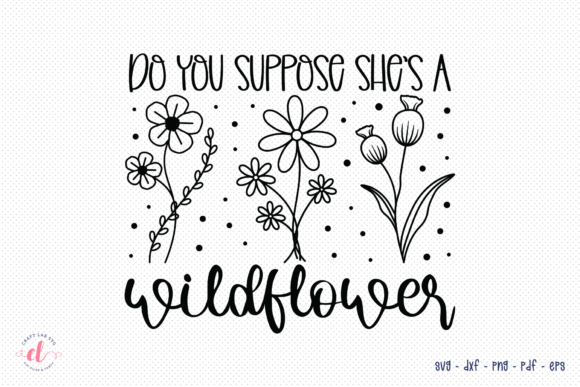
The phrase “Do You Suppose She’s a Wildflower” is rendered in a soft, flowing script—neither overly ornate nor starkly minimal. There’s gentle variation in stroke weight, subtle organic flourishes on the ‘S’ and ‘W’, and intentional spacing that breathes without feeling loose. The wildflower motif isn’t literal illustration; instead, it’s implied through the rhythm of the letterforms and a single, understated floral accent (a daisy-like bloom tucked beneath the final ‘e’). This restraint makes it feel mature—not cutesy—and instantly signals a brand voice rooted in quiet confidence, natural beauty, and gentle strength.
Where It Shines in Real Client Projects
I recently used Do You Suppose She’s a Wildflower SVG in a packaging refresh for a small-batch herbal tea line launching a spring collection. It anchored the back label beautifully—scaled large enough to read at arm’s length on a shelf, yet graceful enough to sit beside hand-drawn botanical line art and muted earth-tone typography. Its emotional resonance elevated the entire visual hierarchy: customers didn’t just see “tea”—they felt invitation, care, and kinship.
It performs exceptionally well across:
- Product mockups—especially for mugs, linen tote bags, and ceramic candle vessels where soft script enhances tactile, artisanal appeal
- Social media graphics—as a hero element in Instagram carousels or Pinterest pins paired with neutral backgrounds and ample negative space
- Printable designs—for wall art bundles, affirmation cards, or wedding suite accents where clients seek gentle, non-religious spiritual tone
- Cricut projects—cut cleanly on vinyl, heat transfer, and cardstock thanks to its open paths and minimal overlapping elements
- Brand identity systems—not as a logo, but as a supporting graphic element in pattern repeats, email headers, or website section dividers
Contexts That Demand Extra Care
This isn’t a universal-fit SVG. Its lyrical quality means it can easily vanish in cluttered layouts or compete with bold sans-serif headlines. Avoid using Do You Suppose She’s a Wildflower SVG in:
- Small-scale applications like business card footers or app icons—fine details blur, and readability suffers
- High-contrast or textured backgrounds unless carefully tested—its softness can get lost against busy patterns or grainy substrates
- Corporate or tech-forward branding—its warmth reads as intentionally unpolished, which clashes with precision-driven visual languages
- Minimalist branding systems requiring absolute typographic neutrality—it carries distinct personality, not blank-canvas flexibility
Design Judgment: Beyond Aesthetics
What makes Do You Suppose She’s a Wildflower SVG commercially valuable isn’t just how it looks—it’s how it functions within a broader creative design strategy. In editorial design for a wellness blog, it added emotional texture to an otherwise text-heavy feature. In a Canva template for Etsy sellers, it became a go-to “tone-setter” for product description banners. As part of a larger design bundle, it plays well alongside serif body fonts and muted watercolor PNGs—but fights with ultra-thin display fonts or aggressive geometric sans-serifs.
Crucially, it strengthens visual trust. When placed beside authentic photography of real hands harvesting herbs or stitching linen, it doesn’t feel decorative—it feels aligned. That alignment translates directly to audience engagement: viewers pause longer, share more, and connect the message to lived experience—not marketing speak.
Practical Designer Notes Before Client Use
Before dropping Do You Suppose She’s a Wildflower SVG into any commercial design, I always run these checks:
- Test it in black and white—does contrast hold on both light and dark substrates?
- Preview at 10%, 100%, and 500% scale—verify legibility and flow integrity at each size
- Place it on realistic product mockups (not just white backgrounds)—observe how it interacts with material texture and lighting
- Run a print test—especially for sublimation or DTG—checking for ink bleed around fine strokes
- Inspect the SVG code—clean paths mean easier recoloring or integration into CSS-driven web design
- Confirm commercial license terms—this is essential for print-on-demand sellers, digital product creators, and anyone reselling branded merchandise
- Compare pairing options—try it with Georgia (serif), Inter (sans-serif), and a restrained script like Pacifico—to assess typographic harmony
Final Verdict: A Thoughtful Addition to Your Creative Toolkit
Do You Suppose She’s a Wildflower SVG isn’t flashy—but it’s deeply functional. It belongs in the toolkit of designers working with handmade businesses, wellness brands, seasonal campaigns, and publishers building emotionally intelligent visual narratives. As a graphic design asset, it bridges the gap between poetic concept and practical execution. It supports—not overshadows—client storytelling. And when deployed with intention, it transforms a simple quote into a quiet signature of care.
For crafters building Etsy shops, marketers launching empathetic campaigns, or small business owners defining their first brand identity: this SVG earns its place—not because it’s trendy, but because it’s true.